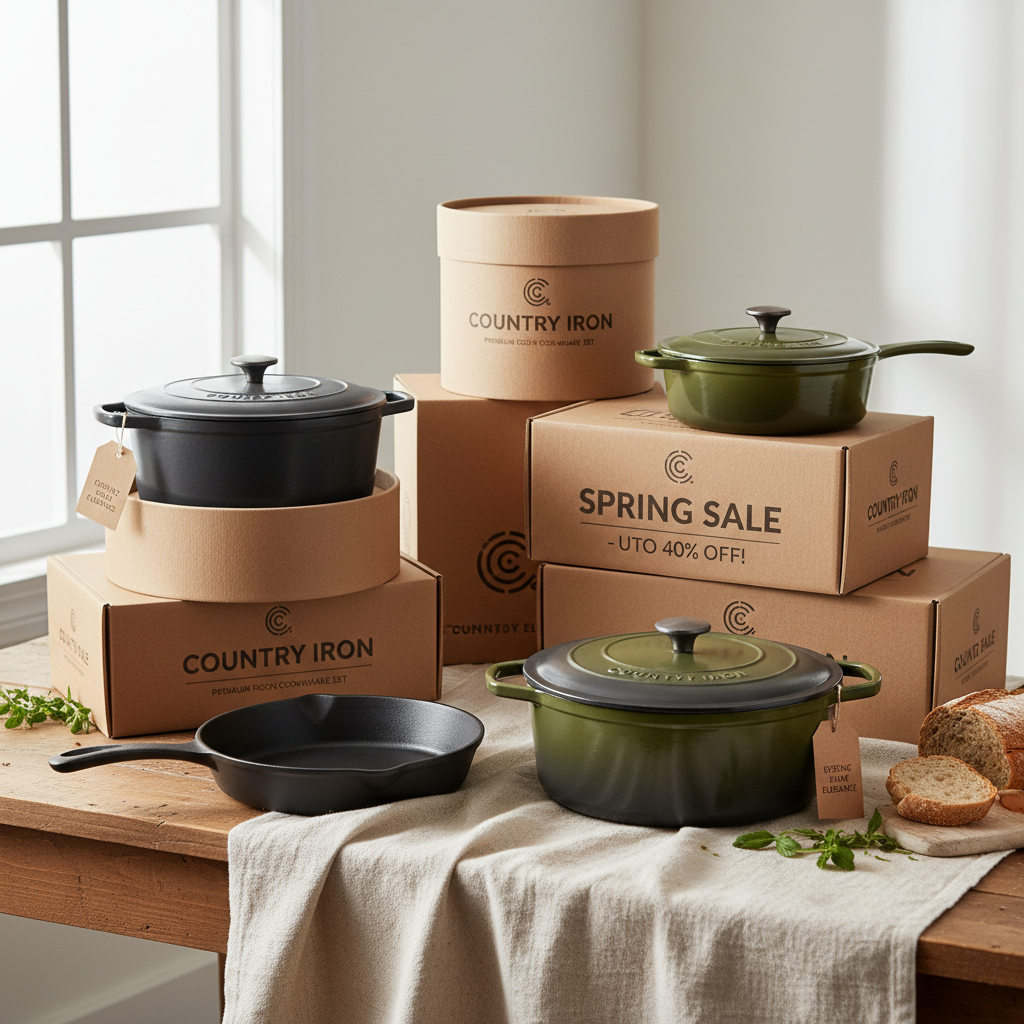
For culinary professionals and high-end cookware brands, a custom cast iron griddle represents the intersection of traditional metallurgy and modern precision engineering. Unlike mass-produced pans, bespoke flat-top cooking surfaces are designed to meet specific thermal requirements, sizing constraints, and aesthetic branding, ensuring consistent searing and heat retention across the entire cooking area.
The demand for specialized ironware has grown as chefs seek tools that can withstand extreme temperatures—up to 400°F (200°C)—without warping or developing hot spots. In the B2B sector, the ability to control every aspect of the production process, from the raw material melt to the final pre-seasoning stage, allows manufacturers to deliver products that enhance flavor through superior heat stability while maintaining rigorous safety and durability standards.
This guide provides a comprehensive technical analysis for procurement officers and product designers. We will explore the critical factors affecting thermal conductivity, the importance of specialized foundry processes, and how to evaluate manufacturing partners to ensure the resulting hardware supports a lifetime of professional use without compromising performance.
The Fundamentals of Bespoke Iron Flat-Tops
Cast iron remains the gold standard for griddles due to its high emissivity and thermal mass. When a product is developed as a custom cast iron griddle, the primary engineering goal is to optimize the relationship between wall thickness and heat distribution. Traditional sand casting allows for complex geometries and heavy-duty builds that are nearly impossible to achieve with stamped steel or aluminum. By managing the carbon content and cooling rates during the casting process, manufacturers can create a surface that is both robust and capable of developing a natural non-stick patina over time.
From a commercial perspective, the value of customization lies in the ability to tailor the tool to the heat source. Whether the end-use involves induction, gas, or electric heating elements, the base design must be calibrated to prevent thermal stress. This requires a deep understanding of metallurgy and a rigorous quality control system, ensuring that each piece exceeds global safety standards. The resulting equipment is not just a cooking tool but a durable asset designed to last generations, blending authenticity with industrial efficiency.
Professional Selection and Manufacturing Guide
Choosing the right specifications for a bespoke cooking surface requires balancing weight, heat responsiveness, and ease of maintenance. The following subsections detail the technical dimensions that B2B buyers must evaluate to ensure the product aligns with their operational needs and brand quality expectations.
Material Composition and Thermal Mass
The core performance of a flat-top depends on the purity of the raw materials and the casting technique. High-density iron ensures that once the surface reaches the target temperature, it remains stable even when cold proteins are added. This thermal inertia is what allows for the perfect Maillard reaction, creating the charred crust essential for professional searing.
| Material Factor | Technical Requirement | Impact on Performance | Buyer's Checkpoint |
|---|---|---|---|
| Carbon Content | Optimized for durability | Prevents cracking under high heat | Verify material certificates |
| Wall Thickness | Consistent across base | Eliminates thermal hot spots | Measure thickness at edges |
| Surface Texture | Controlled grain | Affects oil adhesion and release | Inspect for casting voids |
| Weight Ratio | High mass/surface area | Increases heat retention | Compare weight vs dimensions |
| Tolerance | Precision molding | Ensures flat contact with burners | Check for base warping |
| Porosity | Low air-pocket count | Improves structural integrity | Shot blasting quality check |
Surface Finishing and Seasoning Logic
A professional finish starts with shot blasting to remove impurities and create a surface receptive to seasoning. Pre-seasoning involves applying food-grade oils and baking them at high temperatures to create a polymer layer. This process is critical for reducing stickiness and protecting the iron from oxidation, ensuring the product is "ready-to-use" upon delivery to the end customer.
Design Parameters for Heat Distribution
Effective heat distribution is achieved by optimizing the geometry of the base. For customized units, engineers must account for the specific heat source (e.g., 8, 10, or 12-inch configurations). By integrating advanced foundry technology with traditional methods, it is possible to maintain a flat cooking surface that resists bowing, even when exposed to 400°F environments for extended periods.
Customization Options for B2B Buyers
OEM and ODM services allow brands to modify shapes, sizes, and handle designs to fit specific market niches. Whether it is a specialty size for a boutique hotel or a standardized set for retail distribution, customization ensures the product meets the user's budget and functional requirements without sacrificing the inherent robustness of cast iron.
Application Scenarios: Home vs Commercial
While home users prioritize ease of cleaning and aesthetic appeal, commercial chefs require high-temperature resistance and extreme durability. Custom solutions can bridge this gap by offering varied thickness options—heavier builds for commercial kitchens and slightly more ergonomic weights for domestic cookware sets.
Quality Assurance and Safety Standards
Rigorous quality control is non-negotiable. This includes inspecting for casting defects, ensuring the absence of toxic residues, and verifying that the seasoning is uniform. Adhering to global safety standards ensures that the cookware is healthy, smokeless during initial use, and safe for a wide variety of heat sources.
Lifecycle Maintenance and Durability
The primary advantage of ironware is its lifetime utility. Proper maintenance—avoiding harsh abrasives and maintaining the oil layer—allows the tool to improve with age. When sourcing from a manufacturer like Zhongdacook, buyers benefit from a product designed for longevity, backed by professional craftsmanship established since 1993.
FAQ
What is the main benefit of a custom cast iron surface over a standard pan?
The main benefit is the optimization of thermal mass and dimensions for specific cooking needs. Customization allows for precise control over the thickness and shape, ensuring that the heat is distributed evenly across the surface, which eliminates "cold spots" and provides a more consistent sear than generic, thin-walled alternatives.
Can these custom griddles be used on all heat sources?
Yes, high-quality cast iron is versatile and suitable for almost all heat sources, including gas, electric, and induction (provided the base is flat). They are designed for high-temperature resistance up to 400°F (200°C), making them ideal for both stovetop and oven applications.
What should I look for when evaluating a B2B cookware manufacturer?
Buyers should evaluate the manufacturer's foundry technology, their quality control system (such as shot blasting and pre-seasoning processes), and their capacity for OEM/ODM services. Experience in the industry—such as a track record dating back several decades—is often a strong indicator of consistent quality and reliability.
How is the non-stick property achieved in cast iron?
The non-stick property is achieved through "seasoning," where oil is baked into the iron to create a natural polymer coating. Professional manufacturers perform a pre-seasoning process in the factory, while the user continues to build this layer through regular use and oiling.
What are the lead times for customized cookware orders?
Lead times vary based on stock and customization complexity. Typically, in-stock items ship within 3-7 days, while custom ODM/OEM orders generally require 15-30 days, depending on the order volume and specific design requirements.
Is cast iron cookware eco-friendly?
Yes, cast iron is highly sustainable because it is made from natural materials and is designed to last a lifetime, significantly reducing the waste associated with disposable non-stick pans that require frequent replacement due to coating degradation.
References and further reading
- Metallurgical Properties of Cast Iron - Technical Guide to Heat Retention and Thermal Conductivity.
- International Standards for Food-Grade Cookware Materials and Safety.
- The Science of Polymerization in Cast Iron Seasoning Processes.
Related Articles