Finding reliable and cheap cast iron cookware sets often feels like a trade-off between affordability and long-term durability. In the professional cookware manufacturing industry, the value of a set is determined not just by the price tag, but by the casting quality, seasoning process, and the thickness of the iron walls which ensure heat retention.
Many procurement managers and home chefs struggle to identify whether a budget-friendly set will warp under high heat or suffer from poor surface finish. The challenge lies in distinguishing between "low quality" and "cost-effective" manufacturing, where strategic sourcing and optimized production can lower costs without compromising the structural integrity of the metal.
This analysis provides a comprehensive framework for evaluating affordable cast iron options, focusing on material standards, the impact of enamel coatings, and a practical decision matrix to ensure you secure professional-grade equipment at a competitive price point.

Understanding Cost Drivers in Cast Iron Production

The cost of cheap cast iron cookware sets is primarily driven by the foundry process and the finishing stages. Traditional sand casting remains the most cost-effective method for producing high volumes of skillets and dutch ovens. When a manufacturer optimizes the mold-making time—typically around 7 to 10 days for new designs—they can reduce overhead costs and pass those savings to the buyer.
Beyond the raw iron, the seasoning process and surface treatment significantly impact the final price. Pre-seasoned sets require additional time and energy in the oven, whereas raw cast iron is cheaper but requires more effort from the end-user. For B2B buyers, the balance between "ready-to-use" and "raw" is a key lever in negotiating the unit price for bulk orders.
Evaluating Material Quality vs. Price
Price should never be the sole metric when sourcing affordable cookware. The critical factor is the purity of the iron and the consistency of the wall thickness. Thin-walled cast iron may be cheaper to produce and ship due to lower weight, but it is prone to uneven heat distribution and potential cracking under thermal shock.
Professional manufacturers maintain quality by implementing rigorous shot blasting and pre-seasoning stages. By evaluating the weight of the piece relative to its dimensions, buyers can determine if a "cheap" set is actually a lightweight compromise or a heavy-duty tool produced through efficient manufacturing. A set that retains its heat consistently is a better long-term investment than the lowest-priced option available.
The Role of Enamel in Budget Cookware Sets
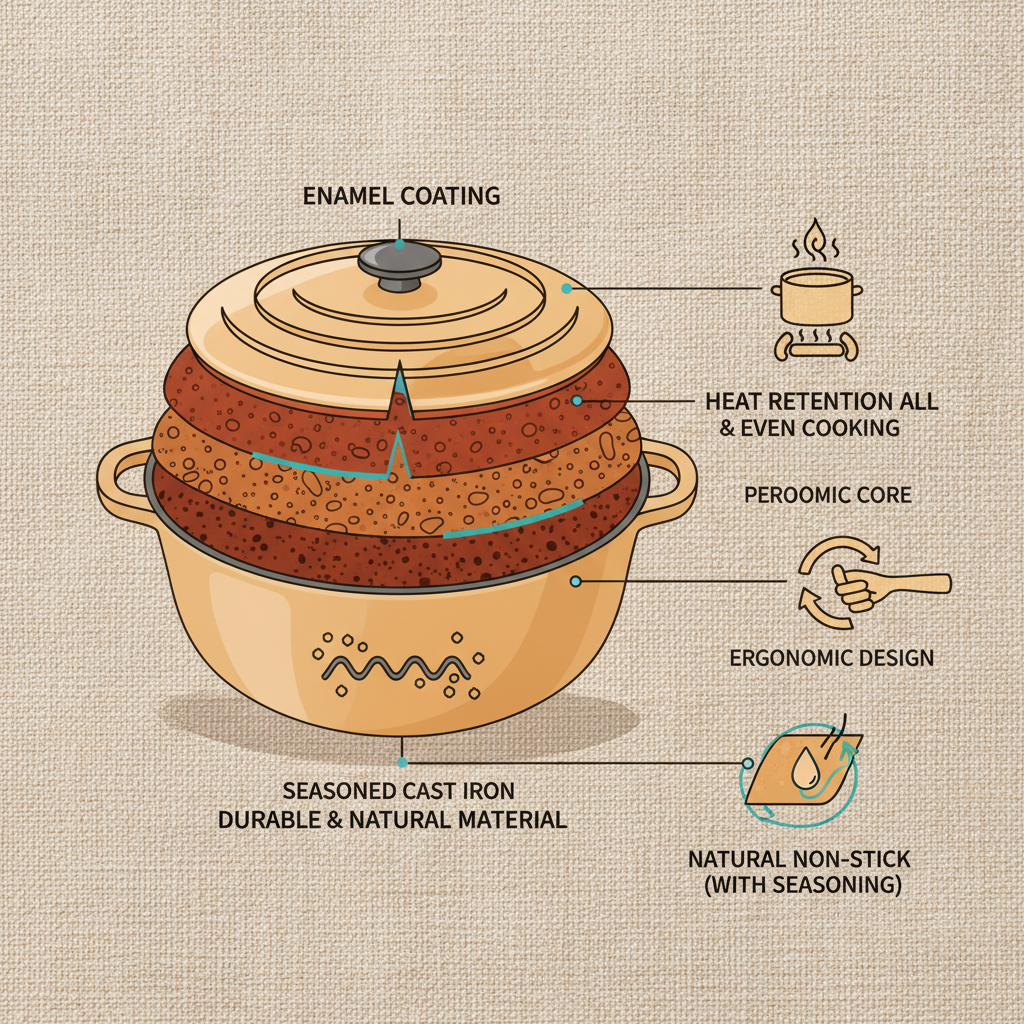
Enameled cast iron offers a different value proposition compared to raw iron. While the enamel process adds a layer of cost, it eliminates the need for constant seasoning and provides a non-reactive surface. For budget-conscious buyers, opting for a shallow seafood cooking pot or a braiser with professional-grade enamel (such as TOMATEC brands) can offer the aesthetic of luxury cookware at a manufacturer's price point.
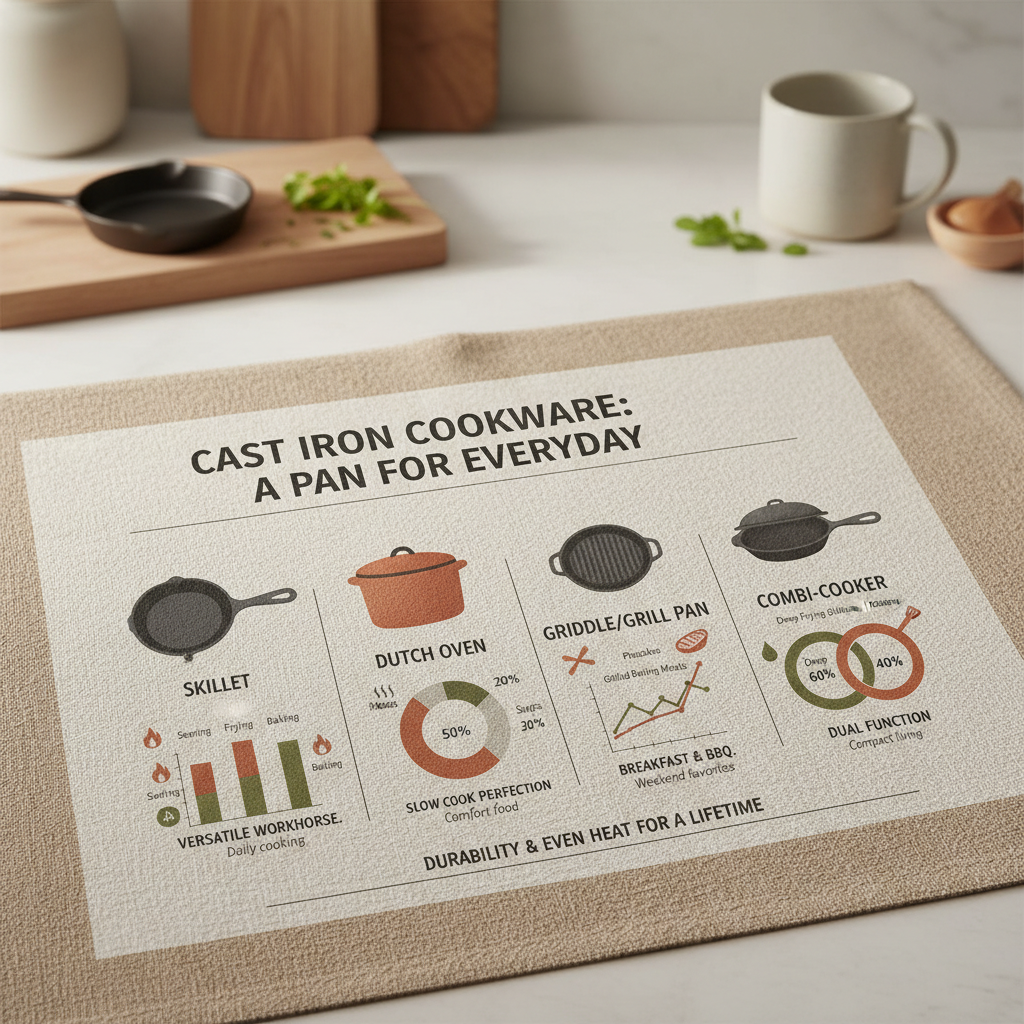
The quality of the enamel is paramount; low-grade coatings can chip or peel under high heat. In a production environment, ensuring the enamel is fused correctly to the cast iron body is what separates a durable tool from a disposable product. For those seeking cheap cast iron cookware sets that are versatile, a mix of raw skillets and enameled dutch ovens often provides the best utility per dollar spent.
Relative Performance Metrics for Budget Sets
To objectively compare affordable cookware, we utilize a normalized scoring system across five critical dimensions. This illustrative framework helps buyers understand where cost-cutting typically occurs and where a manufacturer has managed to maintain high standards despite a lower price point.
As shown in the conceptual index, heat retention and durability typically remain high in cast iron even in budget sets, as these are inherent properties of the material. The primary variances are found in the surface finish and the precision of the lid fit, where higher-end sets invest more in final machining and polishing.
Strategic Sourcing for OEM and ODM Orders
For businesses looking to launch their own brand of affordable cookware, utilizing OEM (Original Equipment Manufacturer) and ODM (Original Design Manufacturer) services is the most effective path. By partnering with a factory that handles the entire process—from mould making to batch production—companies can avoid the markups of trading firms.
Key considerations for bulk sourcing include the Minimum Order Quantity (MOQ), which for specialized sizes can be around 500 pieces. Customization options, such as laser-engraved logos on stainless steel lids or cast logos on the body, allow for brand differentiation without significantly increasing the unit cost. A streamlined lead time of approximately 30 days for batch orders is a benchmark for efficient manufacturing.
Common Risks in Low-Cost Cast Iron Sourcing
The most significant risk when pursuing cheap cast iron cookware sets is the presence of casting defects, such as pinholes or "sand inclusions." These flaws occur when the molten iron does not fill the mold completely or when sand from the mold becomes trapped in the metal. This results in a pitted surface that is difficult to season and prone to food sticking.
Another risk is poor quality control in the pre-seasoning phase. If the oil is not applied evenly or the temperature is not maintained, the cookware may arrive with a sticky or patchy surface. To mitigate these risks, buyers should request samples to verify the smoothness of the finish and the integrity of the casting before committing to a full production run.
Budget Cookware Selection Matrix
Choosing the right set depends on the intended application—whether it is for high-volume commercial use, camping, or retail distribution. The following matrix compares different budget-friendly configurations based on their practical utility and risk factors.
| Set Type | Key Strength | Best Application | Primary Risk |
|---|---|---|---|
| Raw Iron Set | Highest Durability | Outdoor/Camping | High Maintenance |
| Enameled Set | Non-Reactive | Slow Cooking/Braising | Coating Chipping |
| Lightweight Set | Lower Shipping Cost | Retail Entry-Level | Uneven Heating |
| Professional Mix | Versatility | Home Kitchens | Higher Unit Price |
| Specialty Set | Specific Utility | Sizzler/Fajita Use | Limited Versatility |
| OEM Custom Set | Brand Control | B2B Distribution | Higher Initial MOQ |
Ultimately, the most successful procurement strategy focuses on "value per use." A slightly higher investment in a set with better casting quality reduces the rate of product returns and increases customer satisfaction, providing a better return on investment than the absolute cheapest option.
Frequently Asked Questions
"Cheap" often implies a compromise in material thickness or finishing quality. "Cost-effective" refers to products made by manufacturers who optimize production efficiency—such as streamlining mould making—to offer professional quality at a lower price.
Generally, yes, because the enameling process requires additional materials and firing. However, it adds value by removing the need for seasoning and preventing reactions with acidic foods.
Inspect the surface for pinholes or pits, check the balance and weight of the piece, and ensure that lids fit securely without excessive gaps.
Yes, most professional manufacturers offer laser engraving for lids or cast-in logos on the body, though cast logos usually require higher order quantities for the first batch.
For in-stock items, delivery can be as fast as 3-7 days. For batch production orders, the lead time is typically 15-30 days depending on the quantity and customization requirements.
Cast iron is inherently a lifetime material. As long as the casting is sound and the user maintains the seasoning (for raw iron) or avoids thermal shock (for enamel), even budget sets can last for decades.
Conclusion
Securing cheap cast iron cookware sets does not require sacrificing quality, provided the buyer focuses on manufacturing efficiency rather than material reduction. By evaluating the casting integrity, choosing between raw and enameled finishes based on utility, and partnering with experienced manufacturers who offer OEM/ODM flexibility, businesses can deliver high-value products to their customers.
For those seeking professional manufacturing capabilities in the metal products industry, exploring the full range of production options at www.zdcastiron.com can provide the necessary insight to optimize your cookware sourcing strategy.