


Regional Analysis
The Landscape of Cookware in Egypt
Analyzing the intersection of Egyptian culinary traditions and modern manufacturing requirements.
The Egyptian cookware market is deeply rooted in a culinary heritage that favors slow-cooking and high-heat searing, making cast iron a naturally preferred material. In urban centers like Cairo and Alexandria, there is a growing shift toward professional-grade kitchenware as the middle class expands and home-cooking becomes more sophisticated. The market environment is characterized by a strong preference for durability, as cookware is often viewed as a long-term investment for the household. However, the availability of high-precision, export-quality cast iron has historically been limited by the reliance on fragmented local workshops or overpriced luxury imports.
Current trends show a significant increase in demand for specialized cast iron pot set options that offer both versatility and aesthetic appeal. There is a noticeable transition toward enamel-coated iron, which combines the heat retention of cast iron with the ease of cleaning and acid resistance required for modern Egyptian diets. This shift is driven by a growing awareness of food safety and a desire for "lifetime" products that reduce waste. Additionally, the rise of professional catering and boutique restaurant culture in Egypt is creating a surge in demand for heavy-duty, consistent ironware that can withstand the rigors of commercial use.
The primary opportunity lies in bridging the gap between budget-tier ironware and ultra-luxury brands. There is a clear opening for a manufacturer that can provide industrial-grade precision and certified safety at a competitive commercial scale. Constraints include the logistical challenges of importing heavy goods and the need for localized education on the care of seasoned iron. Looking forward, the outlook is positive, as the integration of sustainable manufacturing and eco-friendly coatings aligns with global and local movements toward greener kitchens, positioning high-quality cast iron as the premier sustainable alternative to disposable non-stick pans.
Our Heritage
Evolution of the Casting Process
Tracing the journey from traditional sand casting to modern precision manufacturing.
1993
Foundation Phase
Established Baixiang County Zhongda Machinery Manufacturing Co., Ltd., focusing on the core fundamentals of iron casting and traditional metallurgical techniques.
Growth Era
Industrial Scaling
Expanded production capacity by integrating advanced foundries and shot blasting technology to improve surface smoothness and durability.
Modern Age
Global Innovation
Launched the Zhongdacook brand, focusing on high-end R&D, scientific management, and eco-friendly manufacturing for international markets.
From Basic Utility to Culinary Art
Historically, cast iron was viewed purely as a utility tool. The evolution has shifted toward designing cookware that is as aesthetically pleasing as it is functional, leading to the development of refined shapes and premium enamel finishes that transition from stove to table.
Precision Metallurgy Integration
The industry has moved away from rudimentary casting to controlled alloy mixtures. By precisely managing carbon and silicon levels, modern cookware achieves a superior balance between hardness and thermal conductivity, reducing the risk of cracking under extreme temperatures.
The Shift Toward Sustainable Coating
The transition from chemical non-stick coatings to natural seasoning and food-safe enamel reflects a global health movement. This evolution ensures that the cookware remains non-toxic throughout its entire lifecycle, supporting a healthier lifestyle for users.
Future Outlook
Next-Generation Cookware Trends
How technology and consumer behavior are reshaping the cast iron industry.
Eco-Conscious Foundries
Manufacturing is shifting toward minimal environmental impact, focusing on recycled iron scrap and energy-efficient melting processes to reduce the carbon footprint of each piece.
Hybrid Material Design
The emergence of combined sets, such as enamel-coated exteriors with raw seasoned interiors, allows users to enjoy both the ease of enamel and the searing power of raw iron.
Modular Kitchen Ecosystems
Designing iron skillet set components that are interchangeable and stackable to optimize limited storage space in modern urban apartments.
Smart Induction Compatibility
Refining the base flatness of cast iron to ensure maximum efficiency on induction cooktops, meeting the technical demands of modern electrical kitchen upgrades.
The convergence of these trends indicates a broader shift toward "conscious consumption." Egyptian consumers are no longer looking for the cheapest option, but for the one with the longest lifecycle. By integrating advanced shot blasting and pre-seasoning, manufacturers can now deliver a product that is "ready-to-use," reducing the barrier to entry for users who are intimidated by the traditional maintenance of raw iron.
Furthermore, the integration of scientific management systems in the foundry allows for tighter tolerances in casting. This means that every cast iron frying pan set produced has identical thermal properties, which is critical for professional chefs who rely on consistent heat for repeatable results in high-volume environments.
Practical Applications
Cast Iron in Egyptian Culinary Contexts
How our cookware performs in real-world local cooking environments.
01
Cairo Home Kitchen: Slow-Cooking Traditional Stews
In a typical Cairo residence, the heavy thermal mass of a cast iron casserole is used for slow-simmering traditional dishes. The uniform heat distribution prevents the bottom from scorching during long cooking cycles, while the tight-fitting lid retains moisture, ensuring the meat remains tender and juicy.
02
Alexandria Coast: High-Humidity Seafood Searing
In the humid coastal climate of Alexandria, enamel-coated pans are used to prevent rust while searing fresh seafood. The non-reactive surface of the enamel is essential when cooking acidic ingredients like lemon and garlic, preventing metallic tastes and ensuring the cookware remains pristine.
03
Commercial Catering: Large-Scale Event Preparation
For catering services in Giza, high-capacity cast iron pot set components are used to prepare large batches of food. The industrial-grade durability ensures that the pans can be moved from high-heat burners to ovens without warping, maintaining efficiency during peak hours.
04
Boutique Restaurants: Table-Side Presentation
Upscale restaurants in New Cairo utilize the aesthetic appeal of black cast iron for table-side service. The exceptional heat retention keeps dishes warm throughout the meal, while the professional finish enhances the visual presentation of the food, adding a touch of heritage to the dining experience.
05
Outdoor Cooking: Traditional Open-Fire Searing
In rural Egyptian settings, raw seasoned iron skillets are used over open fires. The robustness of the cast iron allows it to withstand extreme, direct heat without damage, providing the perfect sear for meats and vegetables that only high-thermal-mass cookware can achieve.
Performance Evidence
Representative Use Cases
How professional operators and home chefs evaluate our cast iron solutions.
For commercial operations, consistency is everything. Using a professional cast iron set allows for predictable searing and simmering across multiple burners. The ability to move from stove to oven without any material degradation significantly optimizes the workflow in a high-pressure kitchen environment.
Transitioning to enamel-coated cast iron has solved the issue of rust in humid coastal areas. The combination of the iron's heat retention and the enamel's protective layer makes it possible to cook acidic sauces without worrying about the pan's longevity or the taste of the food.
Sourcing directly from a manufacturer with over 30 years of experience eliminates the quality variance often found in wholesale markets. The precision of the casting is evident in the flat bases, which are essential for efficient induction cooking in modern kitchen upgrades.
Our Journey
Zhongdacook: A Legacy of Precision
Combining decades of industrial expertise with a passion for culinary excellence.
1993
Company Foundation
Baixiang County Zhongda Machinery Manufacturing Co., Ltd. was established as a development-oriented enterprise, laying the groundwork for professional craftsmanship in iron casting.
Expansion Phase
Technological Integration
The company invested in advanced production equipment and foundries, integrating shot blasting and scientific management to meet rigorous domestic and international quality standards.
Present
Zhongdacook Brand Launch
Focused on the high-end cookware market, Zhongdacook now provides innovative, sustainable, and durable cast iron solutions to kitchens worldwide, driven by a strong R&D team.
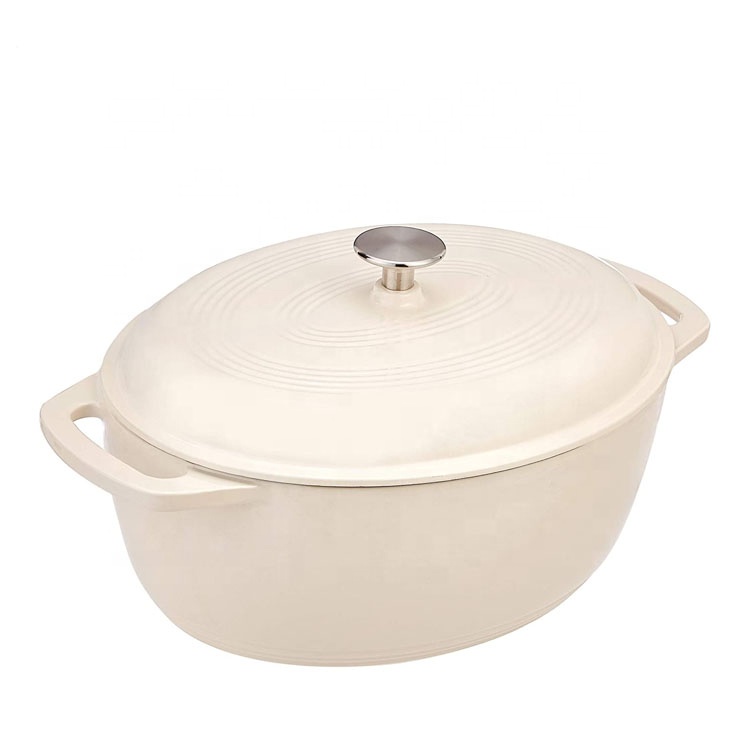
Enamel Cooking Casserole Oval Dutch Oven Cast Iron Enamel Oval Dutch Oven Casserole
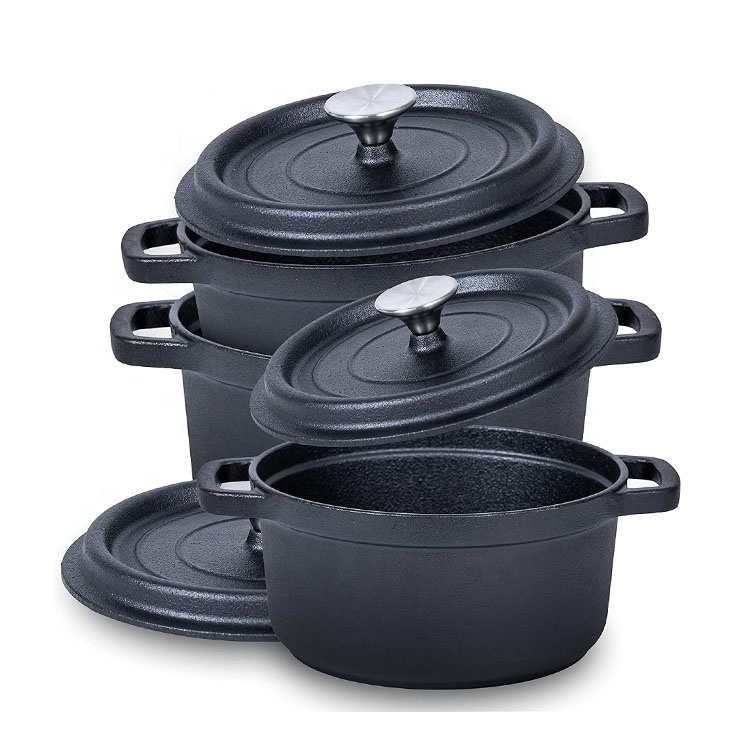
Pre-seasoned 10cm Cast Iron Small Pots Dutch Oven Mini Cast-Iron Casserole Pots

ENAMELED CAST IRON BREAD PAN – RED, OVEN SAFE FORM FOR BAKING AND COOKING - LOAF PAN

CAST IRON FAJITA PLATE SIZZLER PAN WITH WOODEN BASE SERVING PAN
Expert Advice
Common Questions About Cast Iron Cookware
Technical guidance to help you select and maintain the perfect iron set.
What is the primary difference between seasoned cast iron and enamel pots and pans?
The primary difference lies in the surface treatment. Seasoned cast iron is coated with layers of polymerized oil, creating a natural non-stick surface ideal for high-heat searing. Enamel cookware is coated with a glass-like porcelain finish, which is non-reactive, making it perfect for cooking acidic foods (like tomato sauces) and offering much easier cleanup. While seasoned iron requires specific care to prevent rust, enamel is naturally rust-proof and more maintenance-free.
Are these cast iron sets compatible with induction cooktops commonly used in Egypt?
Yes, cast iron is naturally ferromagnetic and is highly compatible with induction hobs. However, the key is the flatness of the base. Because Zhongdacook utilizes precision casting and advanced grinding processes, our pans have a flat bottom that ensures maximum contact with the induction surface, resulting in efficient energy transfer and faster heating compared to unevenly cast budget options.
How do I prevent rust when using ironware in humid coastal regions like Alexandria?
To prevent rust in humid environments, the most important step is to ensure the cookware is completely dry before storage. After washing, we recommend drying the pan with a cloth and then heating it on a low burner for a minute to evaporate all residual moisture. Applying a very thin layer of cooking oil to the surface before storing creates a protective barrier against moisture in the air. For those who prefer zero maintenance, our enamel series is the ideal choice as it is completely impervious to rust.
Can a commercial kitchen handle a high volume of orders using a cast iron frying pan set?
Absolutely. Cast iron is preferred in professional settings for its unmatched heat retention. Once a cast iron pan reaches temperature, it does not drop significantly when cold food is added, which is critical for achieving a perfect sear on meats. Our commercial-grade sets are designed with reinforced handles and optimized wall thickness to withstand constant use and high-temperature cycles without warping, making them a staple for high-efficiency kitchens.
What are the long-term investment benefits of choosing high-quality cast iron over non-stick?
The primary benefit is longevity. While traditional non-stick pans typically degrade and require replacement every 2-3 years as the coating peels, a high-quality cast iron set can last for generations. When properly maintained, cast iron actually improves with age, developing a better natural non-stick surface over time. This eliminates the recurring cost of replacements and reduces the amount of waste sent to landfills, making it both a financially and environmentally sustainable choice.
How can I verify the quality and safety of the iron used in your products?
Zhongdacook implements a rigorous quality control system throughout the entire production process, from raw material selection to final inspection. We adhere to global safety standards to ensure our iron is food-grade and free from harmful contaminants. Our use of advanced foundry technology and scientific management ensures that every piece is structurally sound, with no internal voids or impurities, providing you with cookware that is safe for your family and professional enough for any chef.
Partner with Zhongdacook
Upgrade Your Kitchen with Professional Egyptian-Standard Cookware
Whether you are a commercial distributor seeking a reliable manufacturing partner or a professional chef in Egypt looking for a durable cast iron pot set, we provide the precision and durability your business demands. Contact our expert team today to discuss your specifications, volume requirements, and customized shipping options to Egypt.
Discuss Your Requirements