Selecting the right manufacturing partner for cast iron cookware requires an understanding of the delicate balance between metallurgical precision and artisanal tradition. For businesses sourcing heavy-duty kitchenware, the ability of a factory to maintain consistent thermal mass and surface integrity determines the longevity of the end product.
The global demand for traditional cookware has shifted toward high-performance pieces that can transition seamlessly from stovetops to ovens. This evolution puts immense pressure on dutch oven manufacturers to innovate their casting processes while adhering to strict safety and durability standards.
This analysis explores the technical criteria for evaluating production quality, the operational nuances of OEM/ODM partnerships, and the current shifts in the cast iron fabrication landscape to help buyers make informed procurement decisions.


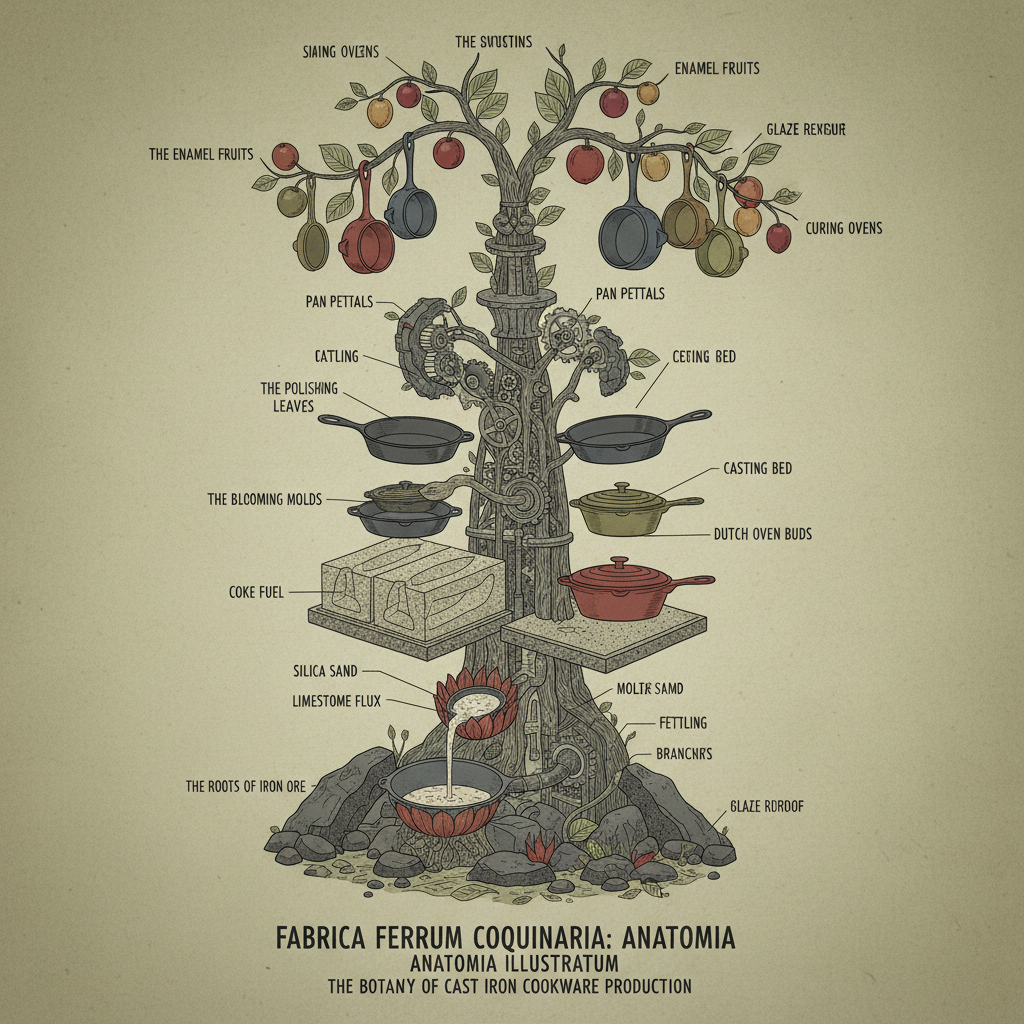
The core of high-quality cookware lies in the foundry's ability to manage molten iron temperature and pour speed. Proper fabrication begins with raw material selection, followed by precise molding and shot blasting to remove imperfections.
Experienced entities like Zhongdacook utilize a combination of advanced foundry technology and traditional methods. By focusing on the authenticity of the material, manufacturers ensure that the resulting Dutch ovens possess the heat retention capabilities required for slow-cooking and braising.
When auditing a supplier, the focus must extend beyond aesthetics to structural density. Porosity is a primary concern in cast iron; air bubbles trapped during the pour can lead to weak points or uneven heating. A rigorous quality control system involves checking the wall thickness and the fit of the lid, which is critical for maintaining the moisture seal during cooking.
Weight distribution is another critical metric. A well-balanced pot prevents tipping on burners and ensures that heat is distributed evenly across the base. This requires precise mold engineering and a deep understanding of metal contraction during the cooling phase.
Furthermore, the compatibility of the cast iron with various heat sources—including induction and gas—depends on the flatness of the base. High-end production lines employ precision grinding and polishing to ensure a flush contact with the heating surface, reducing energy waste and improving response times.
The transition from a raw casting to a kitchen-ready tool occurs during the seasoning phase. This process involves applying a layer of oil and heating it to a temperature where polymerization occurs, creating a natural, non-stick surface that protects the iron from oxidation.
Surface treatment is not merely a finish but a functional barrier; the quality of pre-seasoning directly influences the user's initial experience and the product's resistance to early-stage rusting.
Modern manufacturers often integrate automated pre-seasoning ovens to ensure consistency across thousands of units. This eliminates the variability found in manual application, providing a uniform carbonized layer that enhances food release and durability.
Scalability in the cookware industry is measured by the ability to maintain quality during volume spikes. A manufacturer's capacity is not just about the number of molds but the efficiency of their supply chain and the robustness of their R&D team.
For businesses seeking OEM or ODM services, the delivery timeline is a key performance indicator. While in-stock items can be shipped within 3-7 days, customized orders typically require 15-30 days, reflecting the time needed for mold adjustment and quality verification.
The design of a Dutch oven varies significantly depending on whether it is intended for home kitchens, professional restaurants, or camping environments. Camping cookware, for instance, requires higher durability and often features integrated handles or compatible lids for open-fire cooking.
For the commercial sector, the focus shifts toward heat recovery and ergonomics. Heavy-duty Sizzler plates and Woks require specific wall thickness to prevent warping under intense heat, a technical challenge that separates general manufacturers from specialized cast iron experts.
The industry is moving toward more sustainable manufacturing. Eco-friendly practices, such as reducing waste during the shot blasting process and implementing energy-efficient furnaces, are becoming competitive advantages.
Technological integration in R&D is also accelerating. The use of simulation software to predict heat distribution in new designs allows manufacturers to refine the shape of the cookware before a single mold is cast, reducing waste and improving performance.
Consumer expectations are shifting toward "lifetime products." This means manufacturers must provide better post-purchase support and clearer guidance on maintaining the seasoning, moving the business model from a simple transaction to a long-term product relationship.
Evaluating dutch oven manufacturers requires a structured approach to risk and quality management. Buyers should prioritize factories that offer both OEM and ODM capabilities, as this indicates a higher level of engineering flexibility and a dedicated R&D team.
Payment terms and sample availability are essential trust markers. A manufacturer willing to provide samples for quality checks demonstrates confidence in their production consistency. Furthermore, flexible payment methods such as T/T, L/C, and PayPal facilitate smoother international trade.
The following framework provides a relative assessment of the factors that should influence the selection of a cast iron partner, depending on the buyer's primary objective.
| Evaluation Factor | Home Consumer Focus | Professional Focus | Camping/Outdoor Focus |
|---|---|---|---|
| Surface Finish | Ultra-smooth/Seasoned | High Thermal Mass | Rough/Robust |
| Weight Profile | Moderate/Balanced | Heavy/Stable | Compact/Portable |
| Lead Time Priority | Stock Availability | Customization (ODM) | Durability Testing |
| Critical Metric | Aesthetics/Easy Care | Heat Recovery Rate | Impact Resistance |
| Customization Need | Branding/Packaging | Specific Dimensions | Specialized Handles |
| Quality Assurance | Safety Certificates | Stress Test Data | Extreme Temp Range |
A manufacturer owns the actual foundry and production equipment, allowing for direct control over raw materials, casting temperatures, and quality control processes. This enables them to provide OEM and ODM services, customize product specifications based on a buyer's budget, and typically offer more competitive pricing. A trading company, conversely, sources products from various factories, which may offer a wider variety of items but lacks the ability to modify the technical design of the product.
Quality is determined by the uniformity of the polymerized oil layer. A high-quality pre-seasoning should be smooth, matte or semi-glossy, and free of sticky patches or "pooling" of oil. When tested, the surface should exhibit consistent food release properties across the entire interior. Buyers should request samples to verify that the seasoning does not flake off and that the iron is fully protected from immediate oxidation upon arrival.
For products already in stock, delivery usually takes between 3 to 7 days. However, for customized OEM/ODM orders—which may involve creating new molds, adjusting wall thicknesses, or specific branding—the production cycle typically ranges from 15 to 30 days. This timeline accounts for the casting, cooling, shot blasting, polishing, and multi-stage seasoning processes required to meet professional standards.
Yes, provided the structural integrity is sound. Unlike non-stick coatings that degrade over time, cast iron's performance can actually improve with use as the seasoning layer builds up. While electrical components of kitchenware may have a limited guarantee (e.g., 1 year), the iron vessel itself is virtually indestructible if maintained. The primary risk is rust, which is a reversible condition, making it a sustainable alternative to disposable cookware.
OEM (Original Equipment Manufacturing) occurs when a manufacturer produces a product based on the buyer's exact blueprints and specifications. ODM (Original Design Manufacturing) is more collaborative; the manufacturer uses its own expertise and existing designs to suggest product improvements or new models based on the buyer's general idea and budget. ODM is often preferred by buyers who want a professional-grade product but do not have in-house engineering teams.
Shot blasting involves propelling abrasive particles at high speed against the cast iron surface. This process is essential for removing the "sand skin" left over from the molding process and smoothing out minor surface irregularities. Without proper shot blasting, the seasoning oil cannot adhere uniformly to the metal, and the final product may have rough patches that affect both the cooking performance and the visual appeal of the cookware.
The selection of a partner among various dutch oven manufacturers ultimately comes down to the transparency of their production process and their capacity for technical customization. By prioritizing metallurgical stability, precise surface treatment, and a robust R&D framework, businesses can ensure they are delivering products that offer genuine lifetime value.
As the industry pivots toward sustainability and higher precision, the gap between generic castings and engineered cookware continues to widen. Those who invest in professional craftsmanship and rigorous quality assurance will be best positioned to meet the demands of both the home enthusiast and the professional chef.