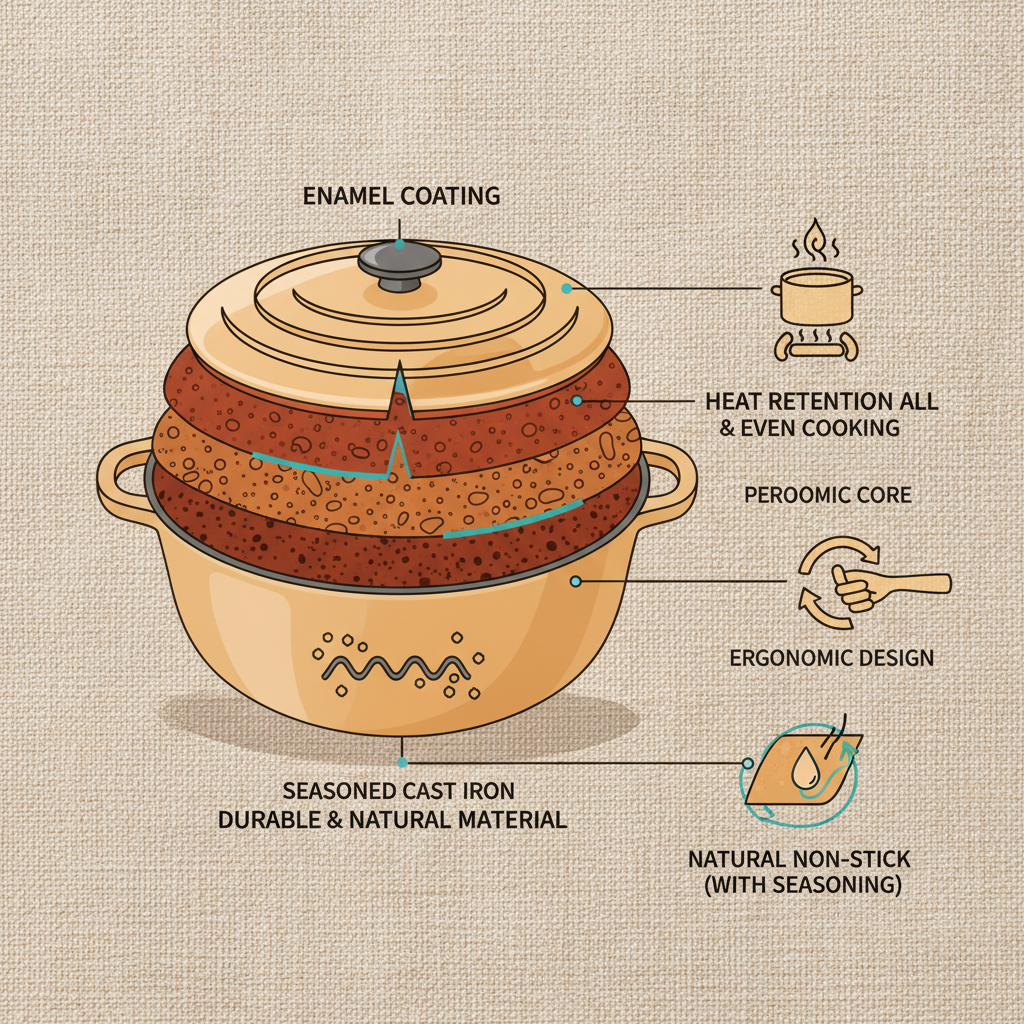
When sourcing professional cookware for a commercial kitchen or a specialized retail line, the price of cast iron dutch oven options often varies significantly based on material grade and manufacturing precision. For procurement managers, the challenge is not simply finding the lowest cost, but identifying the threshold where price aligns with long-term durability and heat retention performance. Understanding these cost drivers is essential for maintaining operational efficiency and ensuring that the equipment can withstand the rigors of high-volume cooking environments.
The valuation of these vessels is intrinsically linked to the quality of the cast iron and the application of protective coatings, such as the eco-friendly enamel used in high-end casserole pots. In the broader context of Cast Iron Bakeware and Cast Iron Cookware Set procurement, the Dutch oven serves as a cornerstone piece due to its versatility in braising and stewing. The balance between the raw material cost and the refined finishing processes determines whether a product is a budget-friendly utility item or a professional-grade tool designed for lifetime use.
By analyzing the manufacturing variables—from mold precision to enamel branding—buyers can make informed decisions that optimize their return on investment. This guide explores the technical and economic factors that influence the price of cast iron dutch oven selections, providing a framework for evaluating supplier capabilities and product specifications. We will examine how professional craftsmanship and sustainable production methods contribute to the overall value proposition of high-performance cast ironware.


Cast iron cookware is produced through a precise melting and casting process where molten iron is poured into sand molds to create dense, heat-retaining vessels. The structural integrity of a Dutch oven depends on the cooling rate and the purity of the raw materials, which prevent porosity and ensure an even wall thickness. This foundational process is what allows the cookware to distribute heat uniformly across the base and sides, making it indispensable for slow-cooking applications.
For manufacturers like Zhongdacook, the integration of traditional casting methods with advanced foundry technology ensures that each piece meets global safety and durability standards. The production flow involves critical stages such as shot blasting for surface smoothing and pre-seasoning to create a natural non-stick surface. These steps are not merely additive but are essential to the product's performance, directly impacting how the cookware interacts with food and heat sources over decades of use.
The final price of a cast iron vessel is determined by several technical variables. First, the grade of the raw iron affects the weight and thermal conductivity; higher-purity iron reduces the risk of cracking under thermal shock. Second, the complexity of the mold design influences the labor cost and the precision of the fit between the pot and the lid, which is vital for maintaining internal pressure during braising.
Precision in mold making—typically requiring 7 to 10 days for new designs—is the primary driver of structural quality, ensuring that the vessel maintains a perfect seal to prevent moisture loss during long-term cooking.
Furthermore, customization options such as laser-engraved logos on stainless steel lid beads or cast-in branding significantly alter the production workflow. While laser engraving is flexible for smaller batches, casted logos require larger initial orders (typically 1000 pieces) to justify the mold modifications. These logistical requirements create a pricing tier system based on order volume and the level of OEM/ODM customization requested by the buyer.
Enamel coating transforms a standard cast iron pot into a versatile, non-reactive tool. The use of professional-grade materials, such as TOMATEC enamel, adds a layer of protection that prevents the iron from reacting with acidic foods (like tomatoes or wine) and eliminates the need for constant seasoning. This technical upgrade increases the initial cost but drastically reduces the maintenance overhead for the end-user.
Eco-friendly non-stick enamel coatings provide a dual advantage: they ensure food safety by meeting environmental standards while enhancing the pot's aesthetic appeal and ease of cleaning in professional settings.
The value of an enameled Dutch oven is found in its lifecycle cost. Because the enamel surface is durable and resists corrosion, the cookware lasts significantly longer in humid kitchen environments compared to raw cast iron. For the buyer, the higher upfront investment is offset by the removal of the seasoning process and the increased versatility of the cookware across different types of ingredients.
Efficiency in the supply chain is a critical metric for wholesalers and distributors. The lead time for cast iron production is divided into three distinct phases: mold creation, sample validation, and batch manufacturing. For a standard order, mold making takes approximately 7-10 days, followed by a sampling period of 3-10 days to ensure the specifications meet the client's quality requirements.
Once the sample is approved, the batch order lead time is typically around 30 days. This timeframe accounts for the melting, casting, cooling, and finishing processes. Understanding these intervals allows buyers to synchronize their inventory cycles and avoid stockouts during peak seasonal demands, particularly for high-demand items like Dutch ovens and frying pan skillets.
In commercial environments, the Dutch oven is utilized for its ability to transition from the stovetop to the oven without losing heat. This makes it ideal for "low and slow" cooking techniques, where consistent temperature is required to break down tough proteins in large-scale catering. The high thermal mass of the cast iron prevents the rapid temperature fluctuations that often occur when adding cold ingredients to a pan.
Beyond the traditional casserole pot, professional chefs employ a wider range of cast iron tools, including sizzler plates for fajitas and heavy-duty woks for high-heat searing. The common thread across these applications is the requirement for a material that can withstand extreme temperatures without warping, a characteristic that defines the industrial value of Zhongdacook's manufacturing output.
The cookware industry is shifting toward a more sustainable production model. Modern foundries are increasingly adopting eco-friendly practices to minimize the environmental impact of iron smelting and enamel application. The focus is on reducing waste during the shot blasting process and utilizing non-toxic, lead-free enamel materials that ensure consumer safety without compromising on the non-stick performance.
Technological innovation is also targeting the efficiency of the heating process. By refining the grain structure of the cast iron during the cooling phase, manufacturers can create cookware that is slightly lighter yet retains the same heat capacity. This evolution addresses the common complaint regarding the weight of traditional Dutch ovens while maintaining the professional performance expected by chefs.
As global standards for food-contact materials become more stringent, the emphasis on certified, high-quality coatings will drive the market. The transition toward "lifetime products" encourages a move away from disposable cookware, positioning durable cast iron as a sustainable alternative that reduces the long-term landfill impact of the kitchenware industry.
Procuring high-quality cast iron cookware involves navigating challenges related to MOQ (Minimum Order Quantity) and customization lead times. For instance, individual sizes and colors typically require a MOQ of 500 pieces. Buyers must balance their desire for a diverse product range with the manufacturer's requirement for production efficiency to keep unit costs viable.
Another common challenge is ensuring quality consistency across large batches. Implementing a rigorous quality control system, such as the one utilized by Zhongdacook, is the only way to ensure that every piece—from the first to the thousandth—meets the same standards for thickness, enamel adhesion, and lid fit. This reliability is what prevents costly returns and maintains brand reputation in international markets.
Strategic procurement requires a partnership with a manufacturer that offers both OEM and ODM services. By collaborating on the design phase, buyers can optimize the product for their specific target market, whether it be high-end residential kitchens or rugged camping cookware, ensuring the final product aligns with the budget and the intended use case.
| Product Type | Core Material | Coating Type | Best Use Case |
|---|---|---|---|
| Dutch Oven | Cast Iron | Eco-Enamel | Braising/Stewing |
| Frying Pan | Cast Iron | Pre-seasoned | Searing/Frying |
| Grill Griddle | Cast Iron | Pre-seasoned | Grilling/Bacon |
| Sizzler Plate | Cast Iron | Raw/Seasoned | Plating/Fajitas |
| Cast Iron Wok | Cast Iron | Pre-seasoned | Stir-frying |
| Bakeware | Cast Iron | Enamel/Seasoned | Baking/Roasting |
The price is primarily determined by the quality of the raw iron, the type of enamel coating used (such as TOMATEC), and the level of customization. Enameled pots are generally more expensive than raw cast iron due to the additional firing processes and materials required to ensure a non-reactive, durable surface.
The standard MOQ for individual sizes and colors is 500 pieces. For those requiring a casted logo on the body of the cookware, the first batch order typically requires 1,000 pieces, with subsequent orders reduced to 500 pieces to maintain production efficiency.
The process begins with mold making (7-10 days) and sample creation (3-10 days). Once the sample is approved, the batch order lead time is approximately 30 days, depending on the total quantity and complexity of the order.
Yes, customization is available for both. Laser engraving on the stainless steel lid bead or the enamel surface has no minimum quantity requirement. However, casted logos on the cookware body require a higher initial order of 1,000 pieces.
Eco-friendly enamel provides a non-stick, non-reactive surface that eliminates the need for seasoning and allows the use of acidic ingredients. It also enhances durability and ease of cleaning, making it more suitable for professional kitchens and home users who prefer low-maintenance cookware.
Yes, Zhongdacook specializes in both OEM and ODM services. They can provide product suggestions based on a buyer's specific ideas and budget, utilizing their strong R&D team and advanced production equipment to bring customized designs to market.
Evaluating the price of cast iron dutch oven options requires a comprehensive understanding of the relationship between material quality, production precision, and long-term utility. From the initial mold making to the application of high-grade enamel, every step in the manufacturing process contributes to the final value. For professional buyers, the goal is to secure equipment that balances these technical requirements with operational costs, ensuring a product that delivers consistent performance throughout its lifetime.
Selecting a manufacturer with a proven track record of quality control and sustainable production is the most effective way to mitigate procurement risks. By focusing on structural integrity and certified coatings, businesses can invest in cookware that meets global safety standards and professional demands. For those seeking high-quality, customizable cast iron solutions, exploring the capabilities at www.zdcastiron.com can provide the necessary insight into professional-grade manufacturing.